Shipping a car in 2026 typically costs between $400 and $2,500, depending on distance, vehicle size, transport type, and season. Most people pay $650 to $1,450 for a standard sedan or SUV on an open carrier, with coast-to-coast routes (2,500+ miles) sitting at the top of that range.
Last May, Mike Patterson got a quote that floored him. He was relocating from Phoenix to Boston for a new job, and the first three brokers he called wanted between $1,395 and $1,890 to ship his 2022 Honda Pilot. He almost decided to drive it himself. Then he learned that the price spread wasn’t because the carriers were different. It was because he was calling at the worst possible time of year on the worst possible lane (north-bound out of Arizona in late spring is a “deadhead” route, carriers run empty up north and need to charge more to make the trip worth it).
Most people get hit with the same sticker shock. The good news: once you understand the seven levers that move car shipping prices up or down, you can usually save $150 to $400 just by changing a few small things about how you book. This guide walks you through the real 2026 pricing, what actually drives it, and how to keep your quote on the low end of the range.
Key Takeaways
– Average car shipping costs in 2026 range from $400 (short-distance, open carrier) to $2,500 (cross-country, enclosed transport)
– The seven biggest cost drivers: distance, vehicle size, transport type, season, route popularity, vehicle condition, and how far ahead you book
– Open transport runs 30-40% cheaper than enclosed and is the right choice for 95% of vehicles
– Booking 2-3 weeks ahead instead of “next week” can save $150-$300 on the same route
– Always compare 3-5 quotes from licensed brokers (USDOT-verified at FMCSA.gov) and skip anyone who demands a deposit before pickup
Average Cost to Ship a Car in 2026
The simplest way to estimate your cost is by distance. Here’s what real customers paid on autosmover.com lanes over the past 12 months:
| Distance | Open carrier | Enclosed trailer | Typical transit |
|---|---|---|---|
| 200-500 miles | $400 – $700 | $700 – $1,100 | 1-3 days |
| 500-1,000 miles | $600 – $950 | $1,000 – $1,500 | 3-5 days |
| 1,000-1,500 miles | $750 – $1,150 | $1,200 – $1,800 | 5-7 days |
| 1,500-2,500 miles | $950 – $1,400 | $1,500 – $2,200 | 7-9 days |
| 2,500-3,000+ miles (coast-to-coast) | $1,150 – $1,450 | $1,800 – $2,500 | 7-10 days |
These are real, not theoretical. They include fuel, insurance, and door-to-door delivery, no hidden surcharges added at delivery.
A few real-world checkpoints from this table:
- Sacramento to Tampa (~3,000 miles): $1,250 open, $2,100 enclosed, 8 days average
- Dallas to Chicago (~960 miles): $725 open, $1,150 enclosed, 4 days
- Los Angeles to Seattle (~1,150 miles): $850 open, $1,300 enclosed, 5 days
- Miami to New York (~1,300 miles): $895 open, $1,375 enclosed, 5 days
Want a precise number for your specific origin and destination? Try our car shipping cost calculator, it factors in route distance, vehicle class, and current carrier capacity, then gives you a number in under 30 seconds with no email required.
Curious how your route prices out? Get a free instant quote, no card, no commitment, real numbers in 30 seconds.
The 7 Factors That Change Your Car Shipping Price
Two people on the same route can pay wildly different amounts. Here’s why.
1. Distance (the biggest factor)
Distance accounts for roughly 60% of your final price. The math is roughly $0.40 to $0.70 per mile for short hauls, dropping to $0.40 to $0.55 per mile on long hauls (carriers spread the fixed costs of pickup and delivery over more miles).
A 300-mile trip rarely drops below $400 because the carrier has fixed time costs even on short runs. A 3,000-mile trip rarely exceeds $1,500 on open transport because per-mile economics improve at scale.
2. Vehicle size and weight
Carriers can fit 7-10 standard cars on an open trailer, but oversized vehicles eat extra slots. Pricing tiers we use:
- Compact (Civic, Corolla, Mazda3): baseline rate
- Sedan (Camry, Accord, Tesla Model 3): baseline + 5%
- Standard SUV/truck (RAV4, F-150, Tahoe): baseline + 10-15%
- Large SUV/truck (Suburban, Sequoia, Ram 2500): baseline + 20-30%
- Oversized (Hummer EV, dual-rear-wheel trucks, lifted vehicles): baseline + 35-50%
Modifications matter too. A Civic with a 2-inch suspension drop is fine on most trailers. A Civic that’s been slammed 4 inches may require a soft-side enclosed trailer, which doubles the price.
3. Transport type (open vs. enclosed)
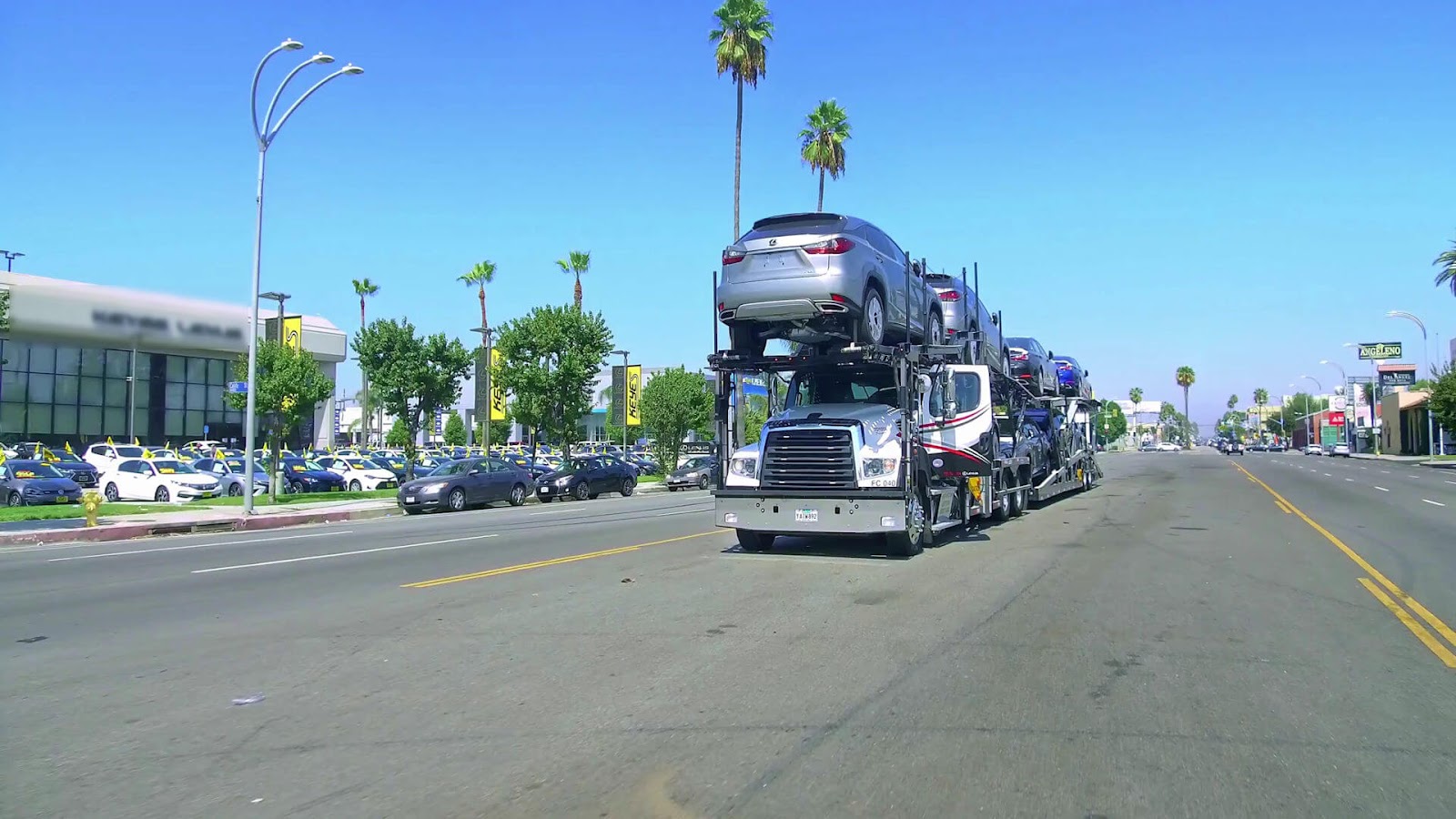
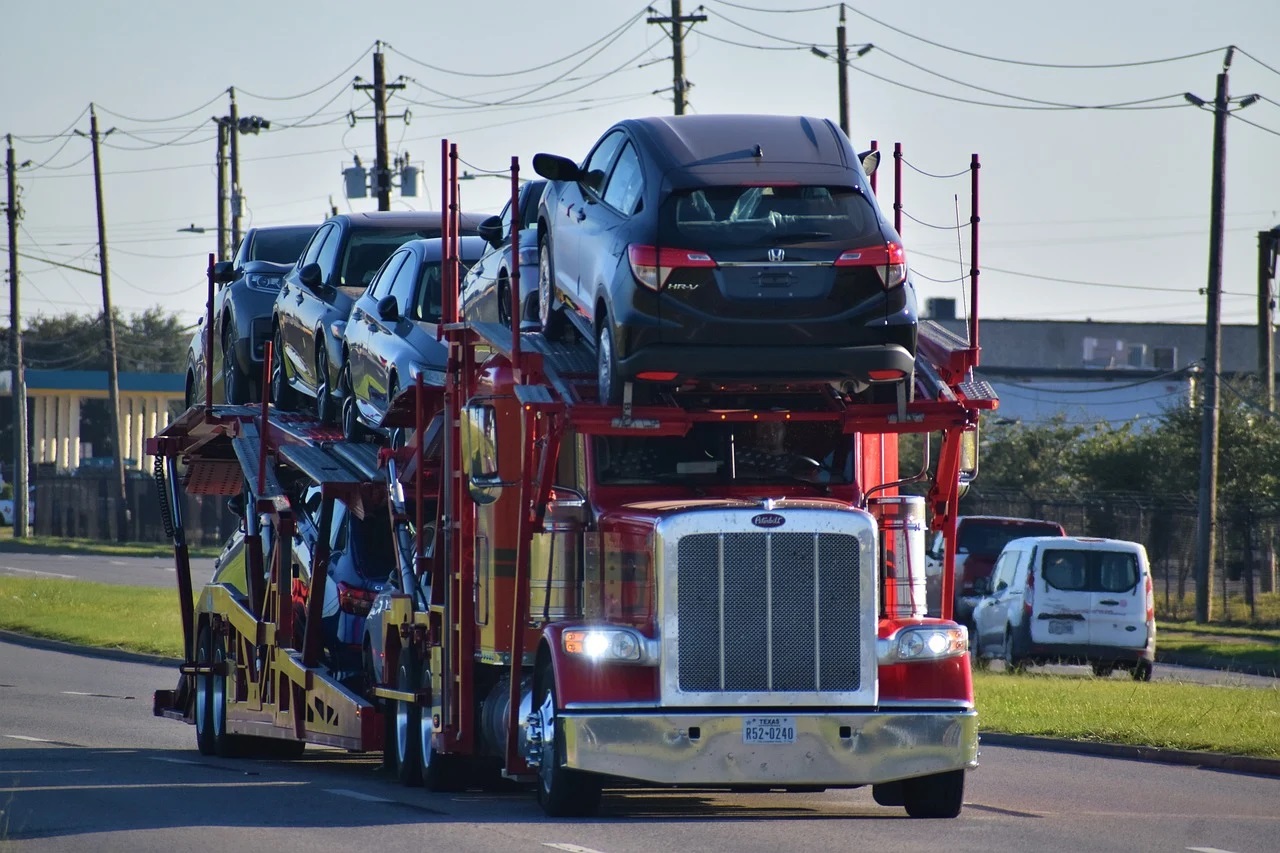
Open transport is what you see going down the highway: a two-deck trailer carrying 7-10 cars, exposed to weather and road debris. Enclosed transport puts your car inside a covered trailer, like a moving truck for cars.
The price difference is consistent: enclosed runs 30-40% more than open. We cover the full open-vs-enclosed math in a dedicated guide on enclosed auto transport, but the short version is: enclosed is worth it for vehicles over $80,000, classics, exotics, and anything you’d be devastated to see with a stone chip on the hood.
4. Season and timing
Auto transport pricing is seasonal in three predictable ways:
- Snowbird season (Oct-Nov, Apr-May): Florida and Arizona become demand magnets. Northbound out of FL/AZ in spring is the cheapest direction. Southbound into FL/AZ in fall is also discounted. The opposite directions (north into FL in fall, south out of FL in spring) cost more because carriers run empty on the return leg.
- Summer relocation peak (Jun-Aug): Highest demand of the year. Family relocations, college moves, military PCS orders all overlap. Prices run 10-20% higher than spring or winter.
- Holiday slowdown (mid-Dec to mid-Jan): Carrier capacity drops as drivers take time off. Fewer trucks on the road means quotes can spike, especially for last-minute requests.
5. Route popularity (the carrier’s perspective)
Carriers love high-traffic lanes because they can fill the truck both ways. The top dense lanes, California to Florida, New York to Florida, Texas to California, have the most carriers competing, which keeps prices down.
Less-traveled lanes cost more, even if they’re shorter. Shipping a car from Bismarck, ND to Boise, ID (~900 miles, low population on both ends) can cost more than shipping LA to Chicago (~2,000 miles, dense lanes both ways).
6. Vehicle condition (running vs. inoperable)
If your car runs and rolls, you pay standard rates. If it’s inoperable, won’t start, can’t roll under its own power, dead battery, brake issues, you’ll pay an additional $150 to $300 because the carrier needs a winch-equipped trailer and extra time at pickup and delivery.
Always disclose this upfront. Showing up to a pickup with an unannounced inoperable car gets the order canceled and can result in a dry-run fee.
7. How far ahead you book
This is the single biggest cost lever you control. Booking 2-3 weeks ahead lets us list your load on the carrier dispatch board with a competitive rate that attracts drivers planning their routes. Booking 3-4 days out means we have to bid above market to attract a carrier who’s about to load up and leave.
The savings: $150 to $300 on a typical mid-distance route just by booking 14-21 days ahead instead of 3-5 days.
Open vs. Enclosed Auto Transport: The Real Cost Difference
Here’s the same five lanes priced both ways:
| Lane | Open | Enclosed | Premium |
|---|---|---|---|
| LA → Phoenix (370 mi) | $475 | $725 | +$250 |
| Atlanta → Miami (660 mi) | $625 | $975 | +$350 |
| Chicago → Denver (1,000 mi) | $795 | $1,275 | +$480 |
| Boston → Tampa (1,400 mi) | $895 | $1,425 | +$530 |
| LA → New York (2,800 mi) | $1,395 | $2,295 | +$900 |
For a daily-driver, that premium isn’t worth it. Open transport carriers move 7+ million vehicles per year in the US with damage rates under 1%. The trailer is built for car transport. Your car will be road-grimy on arrival, but that washes off.
Enclosed makes sense in five specific scenarios:
- Vehicle value over $80,000, the insurance and peace of mind justify the extra $400-900
- Classic or vintage, irreplaceable bodywork, original paint, no aftermarket parts available
- Exotic or supercar, Lamborghini, Ferrari, McLaren, custom builds
- Show car or restoration, concours-level paint that can’t take a single chip
- Long-haul (2,000+ miles), more miles means more exposure; some owners upgrade for cross-country only
When Sarah Khan bought her 2024 Tesla Model Y from a dealer in Dallas in February, she was about to ship it to Atlanta on open transport for $725. Then she remembered the white pearl paint she’d specifically chosen had a $1,200 option price tag. Five hundred dollars for enclosed protection over 800 miles of I-20 winter weather suddenly looked cheap. She upgraded, the car arrived spotless, and she’s never regretted the decision.
Not sure which transport type fits? Compare open and enclosed pricing for your route, the form lets you toggle between both for instant side-by-side quotes.
Seasonal Pricing: When You’ll Pay More (and Less)
If you have any flexibility on your timing, this section can save you serious money.
Lowest-cost windows
- February through early March, post-snowbird, pre-summer. National demand is at its annual low. Prices run 10-15% below the yearly average.
- Late September through mid-October, back-to-school relocations are done, snowbird southbound hasn’t kicked in. Another quiet window.
Highest-cost windows
- Mid-May through August, summer relocations dominate every lane. Prices run 10-20% above average. Last-minute summer orders can spike 30%+.
- Mid-October through mid-November, snowbird southbound rush. Northern states to Florida lanes specifically can run 25% above winter rates.
- December 15 to January 5, holiday capacity crunch. Few drivers want to be on the road through Christmas and New Year. Last-minute orders here are the most expensive of the year.
Direction matters
On any seasonal lane, the direction “with” the migration is cheaper than the direction “against” it. In November, FL to ME is full-price, ME to FL is at a 15-20% premium. In April, the math flips.
If you’re shipping a car somewhere a lot of people are going (FL in fall, AZ in fall, the Northeast in spring), you’re going with the flow and paying less. If you’re shipping the opposite direction, you’re paying for the carrier’s empty return.
Hidden Costs to Watch For (and How to Avoid Them)
Most reputable brokers quote all-in. Some don’t. Here’s what to ask about before you book:
Deposit games
Some brokers quote a low number, then require a $200-$500 non-refundable deposit “to secure the spot.” If the carrier match falls through (which happens), you may not get that deposit back. We don’t take a dollar before pickup, that’s the autosmover.com $0 upfront guarantee, and any broker that demands money before there’s a confirmed carrier on your load deserves a hard no.
“Carrier fee” added at delivery
A few brokers quote you a “broker fee” but don’t include the carrier’s payment, then surprise you at delivery with a separate cash payment to the driver of $400-$800. Read the quote carefully. The price you pay should be the total price, broker plus carrier, period.
Fuel surcharges
When diesel prices spike, some brokers tack on a fuel surcharge between booking and pickup. Lock in an all-inclusive quote at booking and confirm in writing it won’t change.
Cancellation fees
Most brokers don’t charge to cancel an unmatched order (no carrier confirmed yet). Some do. If you might need to cancel, ask before you book.
Storage fees
If your delivery address isn’t ready when the carrier arrives (you haven’t moved in yet, or the dealership isn’t open), you may be charged $50-$100 per day of storage. Coordinate delivery dates carefully.
5 Ways to Save Money on Car Shipping in 2026
These work on any route, with any broker:
1. Book 2-3 weeks ahead, not 2-3 days
Already covered above. Single biggest savings lever you control. $150-$300 average.
2. Be flexible on your pickup date by 3-5 days
Carriers post their routes a few days at a time. If you can say “any day between the 12th and the 17th” instead of “must be the 14th,” we can match you with a carrier whose route already passes through, instead of dispatching one specifically for you. $50-$150 savings.
3. Ship to or from a major metro, not a remote town
If your origin or destination is rural, consider asking about meeting the driver at a nearby major-city interchange. A 30-mile drive on your end can save $150-$250 because the carrier doesn’t have to detour off the interstate. $100-$250 savings.
4. Use open transport for daily drivers
The 30-40% you’d spend on enclosed for a Camry or RAV4 is money you’ll never see again. Skip the upgrade unless your car genuinely needs it. $300-$900 savings on long routes.
5. Compare 3-5 quotes from licensed brokers only
Verify any broker at the FMCSA carrier search. The very lowest quote is usually a bait-and-switch, they reel you in, then claim “no carrier available at that price” and try to upsell you. The very highest is usually a markup. The middle three quotes from verified brokers will tell you the real market rate.
When Sergeant Marcus Reyes started his PCS from Fort Hood, TX to Fort Bragg, NC last August, he got six quotes ranging from $695 to $1,250 for the same 1,300-mile route. The $695 broker required a $300 deposit and turned out not to have an active USDOT registration. The $1,250 broker was a major national name with a hefty markup. The $895 quote in the middle came from a verified mid-size broker with strong reviews. Marcus booked it, the car was picked up two days later, and arrived at Fort Bragg on the seventh day, exactly as quoted. The lesson: middle quotes from verified brokers usually win.
Should You Ship or Drive? The Break-Even Math
Driving sounds free. It isn’t. Using current national fuel averages from AAA’s gas price tracker, here’s the real cost of driving the same distance:
| Distance | Fuel (avg 28 mpg, $4.20/gal) | Hotels (1 night per 600 mi) | Meals + tolls | Wear & tear (IRS rate $0.67/mi) | Total |
|---|---|---|---|---|---|
| 1,000 mi | $150 | $130 | $80 | $670 | $1,030 |
| 2,000 mi | $300 | $260 | $160 | $1,340 | $2,060 |
| 3,000 mi | $450 | $390 | $240 | $2,010 | $3,090 |
Compare to typical open-transport ship pricing:
- 1,000 miles: $750 to ship vs. $1,030 to drive → ship saves ~$280
- 2,000 miles: $1,150 to ship vs. $2,060 to drive → ship saves ~$910
- 3,000 miles: $1,300 to ship vs. $3,090 to drive → ship saves ~$1,790
Plus your time. Driving 3,000 miles is 50+ hours behind the wheel over 5-7 days. At even $30/hour for your time, that’s another $1,500.
Shipping wins on cost AND time for almost any move over 800 miles. We dive deeper in our cross-country car shipping guide if your route is in the 2,000+ mile range.
Bottom Line: What Should You Pay?
For most 2026 routes, here’s the budget you should plan for:
- Short distance (under 500 miles): $400-$700 on an open carrier
- Medium distance (500-1,500 miles): $600-$1,150 on an open carrier
- Long distance (1,500-2,500 miles): $950-$1,400 on an open carrier
- Coast-to-coast (2,500+ miles): $1,150-$1,450 on an open carrier
- Add 30-40% for enclosed transport on any of the above
If your quote falls inside these ranges from a licensed broker, it’s fair market pricing. If it’s well below, ask hard questions about hidden fees and deposits. If it’s well above, get more quotes.
The single best thing you can do for your wallet is book ahead, stay flexible on dates, and skip enclosed unless you genuinely need it.
Ready to see your number? Get a free instant quote on your specific route, no email required, no card, no deposit. You’ll see the all-in price for both open and enclosed transport in 30 seconds. If the number works, our $0 upfront guarantee means you don’t pay a dollar until your car is on the truck. Or call our Fresno-based dispatch team directly at (279) 300-3808, Monday through Saturday, 8 AM to 3:30 PM PST.